
Do I Need a Sump Pump Before Storm Season? What to Check
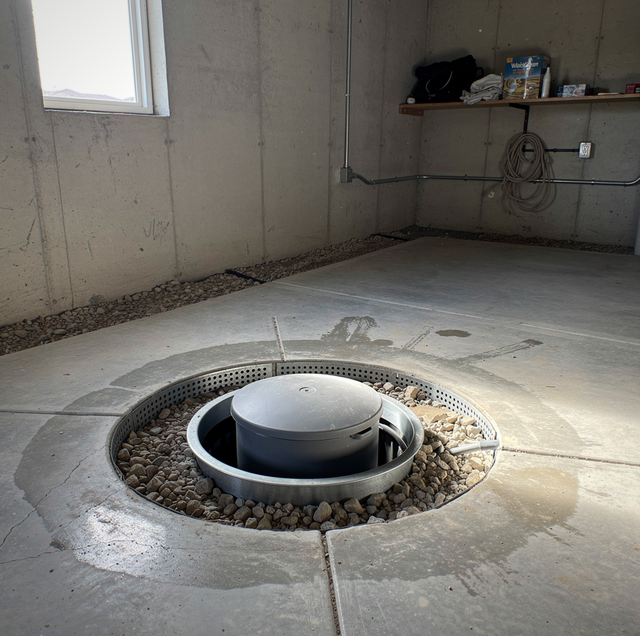
You hear it before you see it: a low gurgle under your floor on a night your street has been dry for weeks. You press your hand to the slab, and it comes back cool, then damp against your palm. Nothing you spilled explains it, and nothing you can see from your doorway points you to it.
That water did not fall on your roof. It rose through the ground your house sits on, and it will rise again whenever the soil around your footings takes on more than it can hold. So your question is not about your gutters, your shingles, or the storm in your forecast. It is about your lot, your soil, and what your ground does in a wet week.
What Fills a Sump Pit When It Has Not Rained in Weeks?
A sump pit is a lined hole cut into the lowest point of a basement or crawlspace floor, usually near a corner, and a sump pump sits inside it to move water back out of the house before that water reaches a finished surface. The pit is not a drain in the plumbing sense, and nothing upstream of it is pushing water in. It fills from the outside, through the gravel and the drain tile that ring the footing, because the pit is the lowest opening the surrounding ground will ever find.
Under every house there is a level below which the soil is saturated, and that level moves. Through a dry stretch it can sit well below the footings, and the pit stays empty for months. After a long soak it climbs, and once it rises past the underside of the slab, the saturated soil presses water toward any gap it can use: the joint where the slab meets the wall, a form-tie hole, a hairline crack in a quiet corner.
So a pit holding water on a clear night is not a malfunction. It is the ground showing you where the water table sits this week, and that bears far closer on your question than any single storm does, because a property whose table runs near the slab will ask for a pump in an ordinary wet spell, not only in a severe one.
The Three Conditions a Technician Reads Off a Property
Soil composition comes first, because it controls how fast water leaves the ground around a foundation. Clay holds water and gives it up slowly, so a clay lot can stay saturated for days after the rain stops and keep feeding a pit long after the sky has cleared. Sand and gravel drain quickly and rarely hold a load that long. Most lots are a mix of both, and the mix often shifts between the native soil and the backfill used against the foundation wall.
Water table level is the second condition, and it is the one homeowners most often guess at. A technician looks for evidence without guessing: how deep neighboring wells run, where water surfaces after a heavy week, whether an existing pit holds standing water in a dry month. The figure that counts is not the average depth across a year. It is how high the table climbs in the wettest two weeks, because that stretch is when a pump must work.
Flood history closes the set. What happened on your street in past wet years carries more weight than what happened on your own lot, because a lot that has stayed dry through three mild seasons has simply not been tested. Older houses nearby hold the record: a neighbor who has pumped out a crawlspace twice, a garage slab that weeps every spring, a low corner that ponds. None of that is proof, and all of it is evidence.
What Fills a Basement Faster, the Storm or the Ground Beneath It?
The storm gets the blame because it is visible, and the ground does the work. Rain falls for a few hours; the soil around a foundation keeps taking that water in for a day or more afterward, and the table under the house keeps climbing well after the clouds have gone. That lag is why a pit that stayed quiet through the worst of a downpour can run every four minutes the following afternoon, with clear sky overhead and nothing falling.
So the honest version of your question is not whether your house has flooded. It is whether the ground under it has ever been asked to hold more water than it could, and how close that came to your slab. A house that has gone ten dry years has either been lucky or has been sitting above a table that never climbed far. Only one of those holds in a wetter year.
The House That Already Has a Pump
If a pump already sits in the pit, the question in front of you changes shape. It is no longer a question of whether to install one; it is whether the unit down there will still be running in eight weeks. A sump pump should be tested every three or four months, and one of those tests should be done before the wet season begins, which puts the next one squarely within the window you are in right now.
Never reach into a sump pit or handle the pump or its float switch while it is connected to power; electric shock is the risk, so have a licensed plumbing technician test it.
Age is the other half of that check. A sump pump typically lasts seven to ten years, and how much of that you get depends on how often it runs, whether it has been maintained, and the quality of the unit. A pump in its ninth season that has worked hard every wet month is a different proposition from one in its third that has barely moved.
A pump that has never run is not a proven pump. Wiring corrodes in a damp pit, circuits fail, and the electrical connections feeding a pump degrade quietly whether or not the motor turns. Those are repairs a licensed plumbing technician handles, and they are worth finding during a dry week rather than a wet one.
Why This Work Gets Booked Before the Season, Not During It
An assessment and an emergency are two different visits. Before the season, a technician can open the crawlspace, inspect the soil, check the grade and existing drainage, and determine whether a pit belongs in this house at all. During a wet week, that same technician arrives to water already standing on a floor, and every option narrows to what can be done in the next hour.
Scheduling runs the same way. The weeks before the first heavy rain are when installers have open days; the weeks after it are when everyone on the street calls at once. A house that needs a pit cut into a slab needs a dry slab to cut, and that is work worth booking now instead of in the middle of a storm.
What a Dry Season Hides
A dry season is a poor witness. It hides a water table that has never been pushed, a pit liner that has never filled, a float switch that has never lifted, and the fair conclusion you drew that nothing here needs a pump. Every one of those holds until the year the ground changes its mind.
The useful move is to have the property assessed while it is still dry: the soil, the table, the flood history on your street, and the pump already down there in the pit, if your house has one.
Frequently Asked Questions
No. A pump earns its place where the ground around your foundation holds water, or where the table climbs near your slab. A house on fast-draining soil, sitting well above the table, with no wet floor in your records, usually does not need one at all.
You rarely can from inside the house. The usable signs sit around you: standing water in a nearby pit during a dry month, a neighbor's crawlspace that stays damp, ground that stays soft days after rain. A technician confirms it against well depths and against the drainage on your street.
Not on its own. A dry record shows the ground has not yet been pushed past what it can hold, not that it cannot be. If your soil is heavy clay, or your lot sits low against the neighbors, the years without water are a small sample, and your lot is worth a look.
Seven to ten years is the usual span, and where yours lands depends on how often it runs, how well it has been maintained, and the unit's quality. A pump cycling through a whole wet season ages faster than one that sits idle. If yours is past year seven, check it before your season starts.
Often yes. Water in a crawlspace has no finished floor to ruin, so it can sit unnoticed for weeks while it soaks your framing, insulation, and ductwork. A pump goes into a crawlspace for the same reason it goes into a basement: the space is below grade, and water arriving there has nowhere to go. Your quarterly look belongs under your house too.
Have it tested. The interval is every three or four months, with one of those tests landing before the wet season begins, and another check worth making ahead of a forecast heavy rain. A technician confirms that the float lifts, the motor starts, the pit is clear of silt, and the electrical connections are sound. If your pump is near the end of its service life, that is the visit when you learn it, with weeks left to act on what you find and your own season not yet started.
Schedule a sump pump assessment before the season turns — a technician can read the soil, water table, and flood history at your address and tell you whether a pit and pump are actually warranted. Solace Plumbing serves Gilbert and the East Valley. ROC #334000. Call (480) 630-0224.
