What Causes a Pipe to Burst? 7 Reasons Pipes Give Way
Quick Answer: A pipe bursts when internal pressure, or the expansion of freezing water, exceeds what the pipe wall can withstand. The most common causes are freezing, water pressure above roughly 80 psi, corrosion that thins the wall, water hammer, tree roots or ground movement, aging material at the end of its life, and manufacturing or installation defects. If one bursts, shut off the main water valve first, then cut power near any water, then call a plumber.
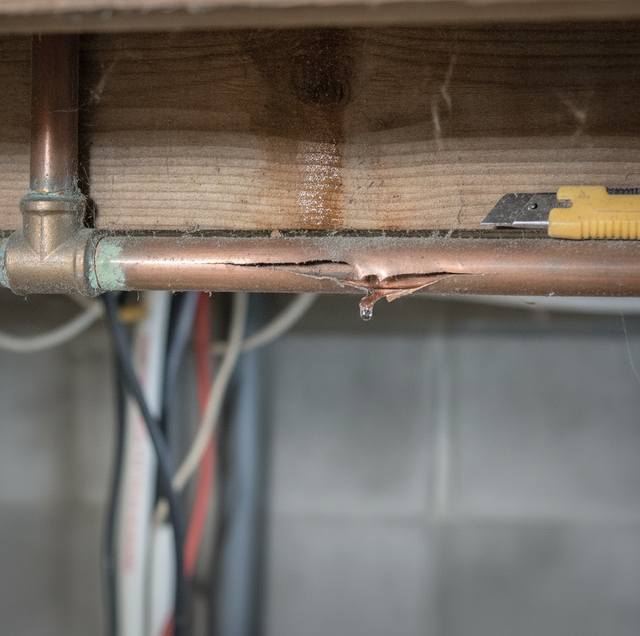
A burst pipe rarely announces itself politely. One minute, the plumbing is quiet, the next, there is water pouring through the ceiling, spreading across the floor, or bubbling up from the yard. By the time most people notice, the failure has already happened somewhere they could not see. Understanding what actually causes a pipe to let go helps you spot the warning signs early, react correctly when it does happen, and prevent the next one.
A pipe bursts for one basic reason: the force pushing outward on the pipe wall becomes greater than the wall can hold. That force is usually water pressure, and sometimes it is ice. Everything below is a different way that the limit gets crossed.
The Basic Mechanics of a Burst
A pipe is a container holding water under pressure. As long as the wall is thick enough and the pressure stays within range, it holds indefinitely. A burst is what happens when that balance tips. Either the pressure rises past the wall's strength, or the wall thins until normal pressure is enough to break it, or something external crushes it from outside.
Consider a balloon squeezed at one end. The air does not disappear; it crowds into the rest of the balloon and stretches the thinnest, weakest spot until it splits there, not necessarily where you squeezed. Pipes fail the same way. The break shows up at the weakest point in the system, which is often a joint, a corroded section, or an aging fitting, rather than at the exact spot where the trouble started. This is why a frozen section near an outside wall can cause a rupture several feet away in the warmer pipe.
With that mechanism in mind, here are the causes that push a pipe past its limit.
Freezing and the Trapped-Water Effect
Freezing is the cause most people know, and it works in a way that surprises them. Water expands about nine percent as it turns to ice. That expansion matters, but it is not usually the ice itself splitting the pipe open. The real damage comes from pressure.
When water freezes inside a pipe, it forms a solid plug. If a faucet downstream is closed, the water sitting between that ice plug and the closed faucet has nowhere to go. As the ice grows, it pushes on that trapped water, and the pressure in that trapped section climbs and climbs until the weakest point gives way. That failure point is often not at the ice at all. It can be a fitting or a length of pipe well past the frozen section.
In warm regions, this is a limited-season, limited-exposure risk rather than a daily one, but it is not zero. A hard overnight cold snap can freeze an unheated garage line, an exposed hose bib, or a pipe running through an uninsulated exterior wall. And the same physics that make cold dangerous in winter, pressure building against a fixed point, are at work year-round from the other causes below. Freezing is one stressor among several, not the whole picture.
Water Pressure That Runs Too High
Most home plumbing is designed to run comfortably in a moderate pressure range. Once pressure climbs much above 80 psi, it starts to constantly stress the pipe walls, the joints, and the connected fixtures. The pipe may hold for a while, but it is living closer to its limit every day, and eventually, a weak fitting or a tired section gives out.
High pressure usually traces back to a pressure-reducing valve, the PRV. Municipal water often arrives at the house at a higher pressure than the home can handle, and the PRV steps it down to a safe level. When that valve fails, or when a home never had one installed, city pressure runs through the house unchecked. You might notice banging pipes, faucets that spray hard, or a toilet that runs. Any of those can be a sign that pressure is sitting higher than the plumbing was built for.
Corrosion Thinning the Wall From Inside
Not every burst needs high pressure or a cold night. Some pipes simply wear out from the inside. Older galvanized steel pipes rust internally over decades. The rust builds up, restricts flow, and thins the surrounding metal until the wall is too weak to hold ordinary pressure. Copper has its own version: in water that is chemically aggressive, copper can develop pinhole leaks that start as a weep and grow into a real failure as the wall around them erodes.
Corrosion is patient. It works quietly for years, then produces a leak that seems to come from nowhere. A discolored patch of pipe, rusty water on first draw, or a stain that appears on a wall or ceiling can all be early evidence that a wall has thinned to the point where it is about to let go under nothing more than a normal day's pressure.
Water Hammer and Repeated Shock
Water in a pipe has momentum. When a valve or an appliance shuts off quickly, all that moving water slams to a sudden stop, and the shock travels back through the line as a bang. That is water hammer. A fast-closing washing machine valve, a dishwasher, or a quarter-turn faucet snapped shut can all produce it.
One bang does not break a pipe. The problem is repetition. That jolt lands on the same joints and fittings hundreds of times, and over months and years, it works connections loose, stresses solder, and fatigues a fitting until it cracks or separates. Water hammer rarely gets blamed for a burst because the failure comes long after the noise started, but the banging is a warning worth heeding. Arrestors and proper strapping can absorb the shock before it does lasting harm.
Roots, Ground Movement, and Outside Forces
Not all bursts come from inside the pipe. Underground water lines face pressure from the world around them. Tree roots seek moisture and can wrap, crush, or work their way into a buried line, cracking it under the strain. Soil that shifts, settles, or moves with changing moisture in the ground can bend and stress a pipe until it fractures. Heavy equipment or a careless dig can crack a line outright.
These failures announce themselves differently from indoor bursts. Instead of water in the house, you see a soggy patch in the yard that will not dry, an unexplained jump in water use, or a drop in pressure at the fixtures. Because the damage is out of sight, an underground burst can run for a long time before anyone connects the wet spot to a broken pipe.
Age, Material, and Old Defects
Every pipe material has a service life, and some age worse than others. Polybutylene, common in homes built roughly from the late 1970s into the mid-1990s, becomes brittle over time and is prone to failing at its fittings. Old galvanized steel is on borrowed time once corrosion sets in. Even good materials reach a point where fittings, seals, and connections have simply cycled through enough pressure changes and temperature swings to give out.
There is also the occasional bad start: a manufacturing flaw in a run of pipe or fitting, or an installation mistake such as an overtightened joint, an unsupported span, or a connection that was never quite right. These defects can sit quietly for years, then surface as a burst that seems random but was built in from the beginning.
Telling One Cause From Another
The signs point to different culprits. A burst after a hard, freezing night, especially near an exterior wall, garage, or exposed fixture, points to freezing. Pipes that bang, fixtures that spray hard, and running toilets point to pressure sitting too high. A failure in an older home with no cold and no pressure symptoms, often with discolored water or a slowly spreading stain, points to corrosion. Banging that has gone on for months before a fitting lets go points to water hammer. And a wet yard, a spike in water use, or lost pressure with nothing wrong inside points to roots or ground movement on a buried line. Knowing which pattern you are looking at helps you and your plumber find and fix the real problem instead of the symptom.
What to Do the Moment a Pipe Bursts
When water is actively flowing where it should not be, the order of your actions matters.
First, shut off the main water valve. This is the single most effective thing you can do, because it stops the source. Every home has one, usually where the water line enters the house or near the meter, and the time to find it is before an emergency, not during one. Turning it off cuts the flow to the entire house and stops the damage from growing.
Second, if water is anywhere near outlets, appliances, or the electrical panel, cut the power to that area at the breaker. Water and electricity together are dangerous, and staying clear of that combination protects you while you deal with the flooding.
Third, call a licensed plumber. A burst pipe is not a patch-and-hope repair. Finding the true failure point, especially when the break is not where the trouble started, and restoring the line correctly, is a job for a professional. In the meantime, mop, towel, and move belongings out of the water to limit what gets ruined.
Preventing the Next One
Most bursts are preventable with a few habits. Keep house pressure in a safe range by making sure a working PRV is holding it down, and have pressure checked if you notice banging or hard-spraying faucets. Insulate pipes in unheated spaces such as garages, exterior walls, and exposed hose bibs so that a rare cold snap has less to work with. Address corrosion and aging materials before they fail: if you have old galvanized steel, known polybutylene, or a history of pinhole leaks, replacing them on your schedule beats reacting to a flood on the pipe's schedule. And know exactly where your main shutoff is, so that if a pipe ever does let go, you can stop the water in seconds instead of minutes.
Frequently Asked Questions
Shut off the main water valve to stop the flow at its source, then open a low faucet, such as a tub spout or an outside spigot, to drain the water still sitting in the lines and relieve the remaining pressure. If water is near outlets or the panel, cut power to that area at the breaker before going near it. Those steps limit the damage in the minutes before the plumber arrives.
The burst comes from pressure, not the ice directly: once ice forms a plug, the water trapped between it and a closed faucet has nowhere to go, and that pressure climbs until the weakest point gives way, often past the ice itself. This is why letting a faucet drip during a hard freeze helps, since the open tap relieves the pressure building behind the ice plug, which is what actually prevents the rupture.
Yes. A normal target is roughly 50 to 60 psi; much above 80 psi constantly stresses the walls and joints until a weak fitting or aging pipe gives out, no cold night required. One catch: a closed system with a pressure-reducing valve also needs a thermal-expansion tank, because heated water expands and, with no expansion tank to absorb it, that expansion spikes the pressure. Banging pipes and hard-spraying faucets are common warning signs.
Corrosion thins the wall from the inside, and it runs fastest where two different metals meet. Where copper joins galvanized steel, the dissimilar metals set up galvanic corrosion that eats the junction quickly, which is why a dielectric union is installed there to separate them. Add the internal rust of aging galvanized steel or copper pinholes in aggressive water, and an old line can fail under nothing more than a normal day's pressure.
Water hammer is the banging shock when a valve or appliance stops fast and the moving water slams to a halt; repeated over months it fatigues joints until a fitting cracks or separates. The older fix is an air chamber, but it can waterlog over time and has to be recharged by draining the system. A modern hammer arrestor uses a sealed piston that will not waterlog, so it keeps absorbing the shock without that upkeep.
Keep pressure in a safe range with a working pressure-reducing valve, insulate pipes in unheated spaces, and replace aging galvanized steel before it fails. For homes left empty for stretches, a whole-house automatic leak-detection shutoff valve adds a real safeguard: it senses abnormal flow and closes the main on its own, so a pipe that lets go while you are away is stopped rather than left running for days.
Have your water pressure and aging pipes checked before one fails — catch a weak point while it is still a repair, not a flood. Solace Plumbing serves Gilbert and the East Valley. ROC #334000. Call (480) 630-0224.
