
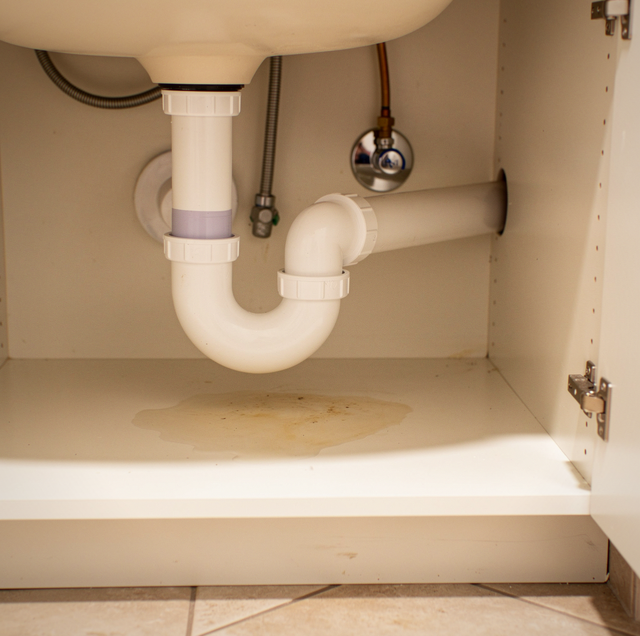
Every drain in a house, and the sewer line itself, is sealed off from the inside of the house by nothing sturdier than a few inches of standing water or a compressed rubber gasket. That water seal, sometimes only a cup or two sitting in a bent section of pipe, is the entire barrier between the rooms people live in and a network of pipes carrying wastewater and decomposition gas straight out to the sewer connection. A smell that reaches every room means that barrier is gone somewhere in the system; a smell that stays near one drain usually means something more local. One case has to be ruled out before any of that applies: a rotten-egg smell that is strongest near a gas appliance, the meter, or a gas line, or that arrives with a hissing sound, is a natural gas leak rather than a failed plumbing seal, and it calls for getting everyone out of the house and calling the gas utility from outside.
Five places in a house routinely lose that seal, and they're worth checking in the order a homeowner can actually confirm them: from a thirty-second test at a drain to something only a plumber can find with smoke and a sealed-up house.
The Trap That Went Dry
Every fixture- a sink, a tub, a floor drain, a laundry standpipe- drains through a bent section of pipe called a trap, which holds a small reserve of water specifically so gas can't travel back up through the drain opening into the room. That water evaporates continuously into the drier air of the house. A fixture used regularly gets that reserve replenished every time it drains. A fixture that sits idle, a guest bathroom, a floor drain in a garage or utility room, a laundry standpipe behind a washer that hasn't run in weeks- doesn't get that refill, and depending on the trap's size and how dry the air is, it can lose enough water within a few weeks for gas to pass through unobstructed.
Pour about a quart of water down any drain that hasn't run in weeks -- a guest bathroom, a floor drain, or a laundry standpipe. If the smell clears and stays gone for a day, the trap was dry and has refilled.
This is the only seal on this list that fails without anything breaking. A trap dries out from inactivity alone, while every other failure here needs something to misalign, crack, or clog first.
The Trap That Keeps Losing Its Seal
A trap that a homeowner has already refilled, sometimes more than once, and that dries out again within days, isn't drying out from disuse. It's losing water to a venting fault. Every trap depends on a nearby vent pipe that lets air into the drain line as water falls past it, so the falling water doesn't pull a vacuum behind it. When venting is inadequate, blocked, disconnected, or simply too far from that fixture, a fast, full discharge elsewhere on the same branch- a toilet flush, a floor drain, a washing machine standpipe emptying- can pull enough negative pressure through the shared line to draw a neighboring trap's water out along with it. Plumbers call this siphoning, and it's exactly why "I poured water down it, and it came back" is a real, recurring report: the vent fault empties that trap again on the next big discharge, however faithfully the fixture gets watered. Finding it means tracing the vent piping behind the wall, which puts this one past what a bucket of water can fix.
The Toilet's Wax Ring and Flange
A toilet carries its own built-in trap, visible as the water sitting in the bowl, plus a second seal where its base meets the floor: a wax ring compressed between the horn on the underside of the toilet and the closet flange, the fitting anchored to the floor drain. That wax forms a gas-tight gasket, held compressed by the toilet's weight and its closet bolts. It fails as the wax ages, loses pliability, and cracks, or when a toilet gets reset without fresh wax and shims after the flange settles too low relative to the finished floor, leaving a gap the compression can't close. This failure concentrates the smell near one specific fixture in most houses, though a ring that has failed under an upper-floor toilet often feeds gas into the floor cavity and the joist bays around it, where it travels through the structure and surfaces as a whole-house smell with no obvious source. The toilet itself usually confirms it: rock the bowl gently side to side at the base. A properly sealed toilet doesn't move under hand pressure; one that shifts even slightly no longer has an intact seal at the floor.
The Vent Stack Above the Roof
The vent stack is the vertical pipe running from the drain system up through the roof. Beyond equalizing pressure for every trap on the line, it carries sewer gas up and releases it above the roofline, where open air disperses it before it reaches a window or door. A stack blocked by leaves, by a bird or rodent nest built inside the open pipe as outdoor temperatures push wildlife toward warm, sheltered openings, or capped shut by ice, sends that gas pressure back into the branch lines rather than letting it escape outdoors. A stack that's clear but terminates too close to a roof valley, a dormer, or a spot where prevailing wind creates a downdraft can push its own discharge back toward the house, which is the case that explains a smell tracking with the weather, worse on windy days, gone on still ones, more than with which fixtures ran that day.
When the Seal Is Not Inside the House
A sewer cleanout is a capped access fitting, often at grade level outside or reachable from a crawlspace, sealed with a threaded plug; a cap that's missing, cracked, or never fully seated lets gas escape right at that point instead of anywhere near a fixture. A fractured section of the buried line running under a slab foundation loses its seal outright. Either failure tends to show up as a steady presence near one spot on the ground floor, regardless of which fixtures get used that day, though a slab break venting into the soil under the house, or a stack fault sitting above either problem, can carry the same gas through the structure until it reads as a whole-house smell. A smell arriving together with more than one drain backing up at once points to a blockage with its own diagnosis, a different problem from a seal that's simply failed. Confirming a missing cleanout cap or a break under a slab isn't a job for climbing into a crawlspace or digging around a foundation; both are where the smell stops being a nuisance question and starts being one worth a plumber's inspection.
What Changes Once the House Closes Up
With windows open through the warmer months, indoor and outdoor air pressure stay close to equal, and air trades freely through gaps around doors, attic vents, and anywhere else it can find, which dilutes a small gas leak enough that a weak trap can go unnoticed for months. Once the house is sealed up and a furnace or heater runs steadily, warm air rises and escapes through the highest points in the house, and the house pulls in replacement air through whatever opening offers the least resistance at the lowest points, including a trap that's already running low. The same seal problem that sat unnoticed since summer can start announcing itself the week the heat comes on, with nothing in the plumbing itself having changed.
Hydrogen sulfide deadens the sense of smell at higher concentrations, so a fading smell isn't proof it's gone. Don't enter a crawlspace or climb onto the roof to check a vent -- ventilate the house and call a professional instead.
A venting fault, a blocked stack, a missing cleanout cap, or a break under a slab needs a plumber's smoke test: the house sealed up, nontoxic smoke pushed through the drain system under gentle pressure, and both the interior and exterior watched for where it escapes.
Frequently Asked Questions
No. Sewer gas, mainly methane and hydrogen sulfide, forms from decomposing waste inside the drain and sewer system itself. Natural gas is a different substance entirely, delivered to the house through a separate pressurized supply line from the utility. A rotten-egg smell near a drain or floor points to a seal failure like the ones above; the same smell near an appliance connector or a gas meter, especially with a hissing sound, points to the supply line instead and calls for leaving the house and calling the utility right away.
Not a lot. A standard inch-and-a-half fixture trap holds roughly a cup or two of water in the bend, a small enough reserve that a fixture nobody uses for several weeks can lose the whole seal to evaporation, even though an identical trap under a sink used daily rarely runs dry. The quart suggested earlier is deliberately more than the trap holds: the point of pouring is to overflow the bend, so the water refills both the seal and the trap arm beyond it instead of trickling in and stopping short.
A floor drain or a wide utility sink trap loses water faster than a narrow sink trap holding the same volume because a shallow, wide trap exposes more surface area to air relative to the water it actually holds. That larger surface-to-volume ratio is why floor drains and rarely used tub traps tend to be the first fixtures to dry out and the first place a smell traces back to.
Yes. A washing machine's standpipe is a drain like any other, and it holds back sewer gas the same way a sink does, through a trap sitting below the visible length of pipe behind the machine. A standpipe with no trap installed beneath it, or one that's dried out between laundry loads, can pull sewer smell directly into a laundry room through the same dry-trap mechanism described above.
A plastic P-trap under a sink can develop a hairline fracture at the slip-nut threads, from age or from being over-tightened during an earlier repair, and that crack breaks the gas seal even while some water still sits in the bend. A trap that still looks full to the eye can be leaking gas through a crack too fine to see without pulling it apart.
A technician introduces a safe, non-staining smoke into the drain system, usually through a vent opening or a cleanout, with the house sealed up and a blower pushing it through under gentle pressure. Anywhere the smoke turns up outside the pipe, at a wall seam, a slab crack, an attic penetration, or a loose vent joint, marks the exact spot the seal has failed, without opening up walls to guess first.
Schedule a sewer gas inspection — a plumber can trace which seal has failed and confirm it with a smoke test if needed. Solace Plumbing serves Gilbert and the East Valley. ROC #334000. Call (480) 630-0224.