
Why Is Water Pressure Low Throughout the Whole House?
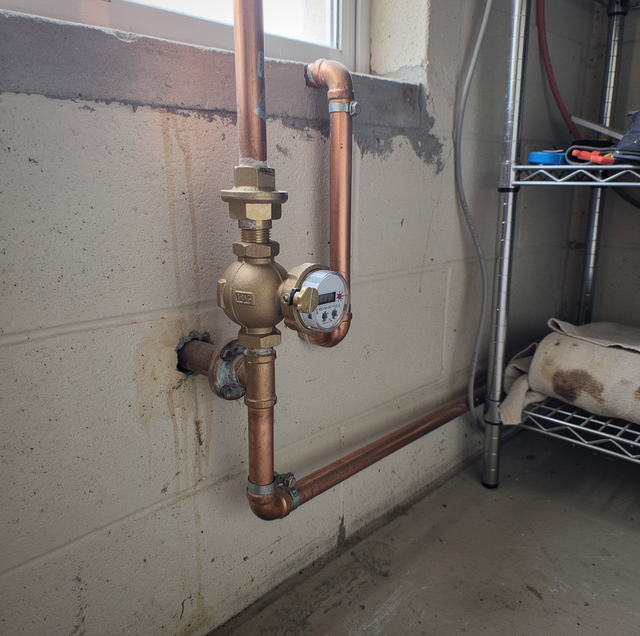
One weak faucet is usually a clogged aerator. If every faucet is running weak at the same time- the kitchen sink, the upstairs shower, the hose bib outside- it points somewhere else entirely: the shared plumbing that feeds all of them. When the whole house loses pressure together, the fixtures aren't the problem. Something upstream is choking the supply before it ever reaches them.
Tracking down which "upstream" is responsible means understanding a handful of places pressure can be lost between the street and your tap.
Start With the Pressure-Reducing Valve
Most homes on a municipal water line have a pressure-reducing valve (PRV) installed where the main line enters the house, usually near the water meter or just past the main shutoff. City water often arrives at 80 psi or higher, which is too much for household plumbing and appliances to handle safely, so the PRV knocks that down to a target range, typically 50 to 70 psi.
A PRV is a spring-loaded valve, and like any mechanical valve, it can fail. The most common failure mode isn't fully closing but drifting: internal parts wear, mineral deposits build on the valve seat, and the PRV starts restricting flow more than it's set to. Because the PRV sits ahead of every branch line in the house, a failing one drops pressure at every fixture equally, which is the signature you're describing. A plumber checks this first with a pressure gauge threaded onto an outdoor spigot or a washing machine valve; a reading well under 40 psi with a PRV installed is a strong signal the valve itself needs replacing or rebuilding.
Corroded or Undersized Pipe
Older galvanized steel pipe corrodes from the inside over the years, and the buildup narrows the pipe's usable diameter, much like plaque narrows an artery. A pipe that started as three-quarters of an inch inside can end up passing water through what functions like a quarter-inch opening once corrosion has built up on the walls. Because this happens gradually, it often gets blamed on the water utility, when the real cause is decades of mineral and rust scale lining the inside of the pipe itself.
This kind of pressure loss usually worsens over months or years rather than appearing overnight, and it tends to show up first at fixtures farthest from the main line or on upper floors, where there's less pressure to spare in the first place. A camera run through an accessible section of galvanized line can confirm the narrowing directly.
A Leak in the Main Line
A leak between the meter and the house diverts water before it reaches any fixture, lowering pressure at every tap at once and often appearing alongside a jump in the water bill or a damp patch in the yard along the line's path. Because main lines run underground, often below caliche or hardpan soil that resists easy digging, a leak here isn't something you can see the way you'd see a leak under a sink. Listening equipment that picks up the acoustic signature of escaping water under pressure, or a simple meter test (shutting off every fixture in the house and watching whether the meter's low-flow indicator still spins), is how a plumber confirms it without excavating first.
A Clogged or Failing Water Softener
If the house runs through a water softener, the resin tank is another point where flow can bottleneck. Resin beads that have channeled (formed narrow paths instead of an even bed) or a scaled internal valve restrict flow through the entire unit, and since all house water routes through the softener, the whole house feels it. A bypass valve on most softener setups lets you test this directly: switch the softener to bypass, and if pressure jumps back to normal, the softener or its internal plumbing is the bottleneck rather than the main line or the PRV.
Multiple Fixtures Running at Once
Before assuming a mechanical failure, rule out the simple explanation: pressure legitimately drops when several fixtures draw water simultaneously, because the supply line and meter can only deliver a limited total flow rate. A dishwasher, a load of laundry, and an upstairs shower running together can make pressure sag noticeably, and that's normal physics rather than a failing part. The distinction is whether pressure is weak only under that kind of simultaneous demand, or weak even with a single tap open and everything else off.
| Symptom Pattern | Likely Cause | What Confirms It |
|---|---|---|
| Weak everywhere, all the time, even with one tap open | PRV drifting low | Pressure gauge reading well under the 50-70 psi target |
| Gradual decline over months or years, worse upstairs | Corroded/undersized galvanized pipe | Camera inspection of an accessible pipe section |
| Sudden drop plus a rising water bill or damp yard area | Main line leak | Acoustic leak detection or a meter test with all fixtures off |
| Weak only through softened water, normal at an outdoor bib | Softener resin bed or internal valve | Pressure comparison with softener on bypass |
| Weak only when multiple fixtures run together | Normal simultaneous demand | Pressure returns to normal with one fixture at a time |
Why This Isn't a One-Fixture Fix
Swapping an aerator or a showerhead cartridge fixes a single weak fixture because the restriction is right there at the tap. None of that touches a PRV, a corroded main, a leak, or a softener, because those sit upstream of every fixture in the house. That's the practical test worth running before calling anyone: open one tap you rarely use, like an outdoor hose bib that bypasses most of the interior plumbing, and see if it's weak, too. If it is, the cause lives somewhere between the meter and the first branch in the house, not in any single fixture.
Well Water Adds Its Own Variable
A house on a private well, instead of a municipal connection, has a different first suspect: the well pump and pressure tank, rather than a PRV, since there's no city supply pushing water in from the street to begin with. A waterlogged pressure tank or a pump that's losing capacity can produce the same whole-house symptom described above, weak pressure at every fixture, but the fix for that lives on the well side of the system, not in the household plumbing. Before assuming the well equipment is at fault, it's still worth ruling out the house-side causes above: the main line running from the well tank into the house, and any pressure-reducing equipment installed along it. If those check out and the trail leads back to the pump or tank itself, that's a job for a licensed well contractor rather than a plumber.
Irrigation and Outdoor Systems Sharing the Line
In a house where the irrigation system ties into the same main line rather than a separate meter, a problem on the irrigation side, a stuck valve or a break in the underground irrigation piping, can pull enough flow to drop pressure at every indoor fixture while the sprinklers or drip system are running, and sometimes even after, if a valve isn't seating and closing all the way. Running the outdoor-tap test from earlier with the irrigation system off, then again while it's running, helps isolate whether it's a factor: if pressure is fine with irrigation off and only sags while it runs, the problem lives in the irrigation system rather than the household plumbing, and that's a job for an irrigation specialist. What is worth having a plumber check first is whether a backflow preventer on that shared line is part of the picture, since backflow protection on an irrigation tie-in is plumbing, even when the valve or piping beyond it isn't.
Frequently Asked Questions
Yes. A break somewhere in the utility's distribution main, nearby hydrant use, or unusually high demand across a neighborhood on a hot day can all drop the pressure arriving at your meter before it ever reaches your PRV or fixtures. This kind of drop is usually temporary and often affects neighbors at the same time, which is worth checking before assuming a mechanical failure on your side of the meter. If pressure returns to normal within a day and nobody touched anything in the house, the utility side is the more likely explanation.
Yes. A PRV can fail in either direction: if the internal diaphragm ruptures or the valve sticks open, full city pressure passes straight through instead of being reduced, which can run well above 80 psi and stress every fixture and appliance in the house rather than starving them.
Occasionally. Older meters, or ones with debris caught in the internal measuring mechanism, can create a bottleneck at the exact point where the utility's line meets your private line. A plumber can rule this out by comparing pressure just before and just after the meter.
Sometimes, yes. A well pump and pressure tank cycle within a set range, but that range can still exceed what household fixtures and appliances are rated to handle, so some well setups install a PRV downstream of the pressure tank anyway. Being on a well doesn't automatically rule a PRV out as a suspect; it just changes where in the system to look for one.
Yes, and it points somewhere specific: if cold water pressure is fine but hot water is weak at every tap, the restriction is usually inside the water heater itself, most often sediment or scale narrowing the internal passages, rather than anywhere in the main supply line or PRV.
Yes. If part of the house was repiped with PEX or copper while older galvanized sections remain elsewhere, pressure can differ noticeably by zone, since the corroded galvanized runs still bottleneck flow to the fixtures they feed, even though the newer piping performs normally.
None of the causes above take guesswork to confirm. A gauge at the spigot, a bypass switch on the softener, or a look at the meter while every fixture sits idle tells a plumber which one is actually happening in your house, rather than which one is simply most common in general. That distinction matters, because most of these fixes don't involve repiping the whole house — only the corroded-galvanized scenario usually does.
Book a whole-house pressure diagnosis — pinpoint whether it's the valve, the pipe, or a hidden leak. Solace Plumbing serves Gilbert and the East Valley. ROC #334000. Call (480) 630-0224.
