Toilet Won’t Stop Running? 5 Fixes That Actually Work
Quick Answer: A toilet that keeps running has one of five problems: a worn or warped flapper that no longer seals, a flush chain that is too short or tangled, a float set too high so water spills into the overflow tube, a failed fill valve, or a cracked flush valve. Start with a dye test to confirm a flapper leak, then check the chain, float, and fill valve in that order.
That faint hiss from the bathroom, or the whoosh of the tank topping itself off every few minutes, is a toilet telling you a part inside it has quit. A running toilet almost never fixes itself, and it can waste more water in a day than a long shower does. The good news is that the tank holds only a handful of parts, most of them cost a few dollars, and the common failures are ones you can usually diagnose and repair in an afternoon with no special tools.
Before you start swapping parts, it helps to understand what those parts do. Once you see how a toilet fills and flushes, the cause of the running usually names itself.
How A Toilet Fills And Flushes
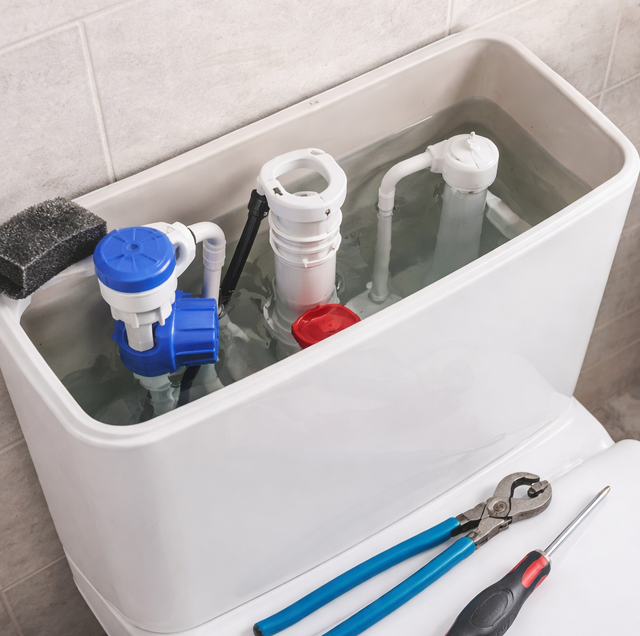
Lift the lid off the tank, and you are looking at two jobs happening in one small space: emptying the tank into the bowl, and refilling it afterward.
When you press the handle, a lift arm pulls a chain, and the chain raises a rubber or silicone flapper at the bottom of the tank. That flapper sits over a large opening called the flush valve. With the flapper up, the full tank of water rushes down through the flush valve into the bowl, and that surge is what carries waste out. Once the tank empties, the flapper drops back down and reseals the opening.
Now the refill begins. A tall part on one side, the fill valve, senses that the water is gone and opens to let fresh supply water in. As the water rises, a float rides up with it. The float is either a ball on an arm or a cup that hugs the fill valve shaft. When the float reaches its set height, it shuts the fill valve off, and the tank sits full and quiet until the next flush.
One more part matters here: the overflow tube, the open vertical pipe in the middle of the tank. It is a safety drain. If the water level ever climbs too high, the excess pours into that tube and down to the bowl instead of onto your floor. A thin refill line usually clips to the top of it to send a little water into the bowl during the fill.
A toilet runs nonstop when any one of those jobs fails to finish. Either the flapper is not sealing, so water keeps trickling out, and the fill valve keeps topping off, or the fill valve never gets the signal to shut off, so water keeps pouring in and out the overflow tube. Every fix below traces back to one of those two situations.
Find The Leak With A Dye Test
The most common cause of a running toilet is also the quietest: a flapper that no longer seals. Water seeps past it from tank to bowl in a slow, silent leak, the tank level drops, and the fill valve clicks on every so often to refill, sometimes called phantom flushing.
To confirm a flapper leak, drop a few drops of food coloring into the tank water, stir gently, and leave the toilet unflushed for 15 to 20 minutes. If colored water has crept into the bowl, the flapper is leaking and needs attention; if the bowl water is still clear, the fill valve or float is the cause instead.
This one test saves you from guessing. A leaking flapper is the fix most homeowners reach for first, so it is worth ruling in or out before you touch anything.
Check And Replace The Flapper
If the dye test points to the flapper, shut off the water at the supply valve on the wall behind or beside the toilet, then flush to empty the tank.
Inspect the flapper's underside and the seat it presses against, the smooth ring around the flush valve opening. A flapper is a wear part. Over years, the rubber goes stiff, warps, or grows a slick film, and a warped flapper simply cannot lie flat enough to seal. Run a finger around the seat, too. Where the water is hard, mineral scale builds a gritty crust on the seat that holds the flapper open a hair. Wiping the seat clean with a rag or a plastic scouring pad, never metal, sometimes restores the seal on its own.
If the flapper is stiff, cracked, or coated, replace it. Unhook it from the two pegs at the base of the overflow tube, unclip the chain, and take the old one to the hardware store to match the size, since toilets use a few different diameters. Snap the new flapper onto the pegs, reconnect the chain, turn the water back on, and run another dye test to confirm the seal.
Adjust The Chain And The Float
Two quick adjustments solve a surprising number of running toilets, and neither costs anything.
The chain: The chain between the handle arm and the flapper needs just a little slack. If it is too short or gets tangled, it holds the flapper open a crack and water trickles past nonstop. If it is too long, it can slip under the flapper and prop it open. Adjust the chain so there is a small amount of slack, about a half inch of sag, when the flapper is closed. Move the clip to a different link to take up or let out length, and clear any twist so the flapper drops flat every time.
The float and water level: If the dye test came back clear but the toilet still runs, water is likely spilling into the overflow tube because the float is set too high. Look at the water line inside the tank. It should sit about an inch below the top of the overflow tube. If the water reaches the top of that tube, it drains in continuously, and the fill valve never shuts off.
Lower the float to drop the level. On an older ball-on-a-rod float, turn the adjustment screw where the arm meets the fill valve, or gently bend the arm down. On a newer cup-style float, pinch the clip on the adjustment rod and slide the cup down the shaft. Lower it a little, let the tank refill, and check the level against the overflow tube again.
Replace A Worn Fill Valve
When the flapper seals, the chain and float are set right, and the toilet still hisses or cycles, the fill valve itself has usually worn out. Internal seals and the diaphragm inside it degrade over time, and hard water speeds that up, so the valve either fails to shut off fully or chatters as it struggles to close.
Swapping a fill valve is within reach for most homeowners. Shut off the supply valve, flush to empty the tank, and sponge out the last inch of water. Disconnect the supply line and the lock nut under the tank, lift the old valve out, then set the new one to the right height per its instructions, secure the nut, reconnect the supply line, and clip the refill tube to the overflow tube. Turn the water on slowly and watch for leaks at the connections. Universal fill valves sold at any hardware store fit the large majority of toilets.
Why A Running Toilet Is Worth Fixing Fast
A running toilet is not a minor annoyance you can ignore for months. A steady leak can send a meaningful volume of water straight down the drain every single day, and a badly stuck flapper or overflowing float wastes far more. Over a month, that adds up to hundreds or even thousands of gallons, and you pay for every one on your water bill. Because much of the loss is silent, plenty of homeowners never notice until the bill jumps.
There is a household-damage angle too, and it cuts both ways across the seasons. A fill valve that never shuts off keeps pushing water toward the overflow tube, and if that tube ever clogs or the level creeps past it, the tank can spill onto the floor. Water pooling around the base can work into the subfloor and, over a slab-on-grade home, into flooring and baseboards. The wasted-water problem is the same in July heat or a cool January morning, so there is no season in which a running toilet is fine to leave alone.
Which Fixes Are DIY And When To Call A Plumber
Most running-toilet repairs are homeowner-friendly. The flapper, the chain, the float adjustment, and the fill valve are all designed to be replaced without cutting pipe or soldering, and the parts are inexpensive and standardized. The one habit that keeps every one of these jobs safe is simple: shut off the water at the supply valve before you remove any part, and keep a towel handy for the water left in the tank.
Some situations call for a professional instead. A hairline crack in the flush valve, the plastic seat the flapper sits on, means water leaks past no matter how good the flapper is, and replacing a flush valve requires pulling the tank off the bowl. A cracked tank or bowl leaks onto the floor and needs replacement, not repair. If you have swapped the flapper and the fill valve and the toilet still runs, or if the shutoff valve itself is seized or weeping, those are signs to bring in a plumber. Older or specialty toilets can also use hard-to-source parts that a pro will already know how to match. Anytime water is reaching the floor, stop and get help before it damages the subfloor.
Frequently Asked Questions
A healthy toilet refills its tank in roughly 45 seconds to a minute after the flush finishes, then goes silent. If yours keeps running well past two minutes, or clicks back on every few minutes when no one has flushed, the fill valve or flapper is not doing its job, and it is time to run the checks above.
Yes. Some replacement kits use a canister-style or tower-style flush valve with a seal that lifts straight up instead of a hinged flapper, and these can seat more evenly on toilets where flapper alignment is fussy. They install the same way, but you have to match the kit to your flush valve opening, so measure the opening diameter before buying.
That brief, self-stopping cycle is classic phantom flushing from a barely-leaking flapper. Enough water seeps into the bowl to drop the tank level a fraction, the fill valve tops it off for a few seconds, then quiets down. It is the earliest stage of a flapper failure, so a dye test now will catch it before the leak grows.
It can slow it down. Softened water carries far less calcium and magnesium that crust the flapper seat and stiffen rubber, so parts in a softened home often last longer between replacements. It will not make a flapper last forever, since rubber and silicone still age, but it reduces the scale that props flappers open.
Vinegar is fine and helpful; skip the boiling water. A few cups of white vinegar left in the tank overnight dissolves light scale on the flush valve seat and fill valve without harming the parts. Very hot water can crack the porcelain tank or warp rubber components, so use warm at most and let vinegar do the work.
Not in any way you would notice. A single fill valve draws a small trickle, so it will not lower the pressure at your shower or kitchen sink the way a burst pipe would. What it does affect is your water bill and, if the flapper is dumping water fast, the sound and constant cycling that keep a toilet from ever going quiet.
Book a toilet repair before a small leak drives up your bill — get it sealed right the first time. Solace Plumbing serves Gilbert and the East Valley. ROC #334000. Call (480) 630-0224.
