
Why Does My Garbage Disposal Hum but Not Spin? The Fix
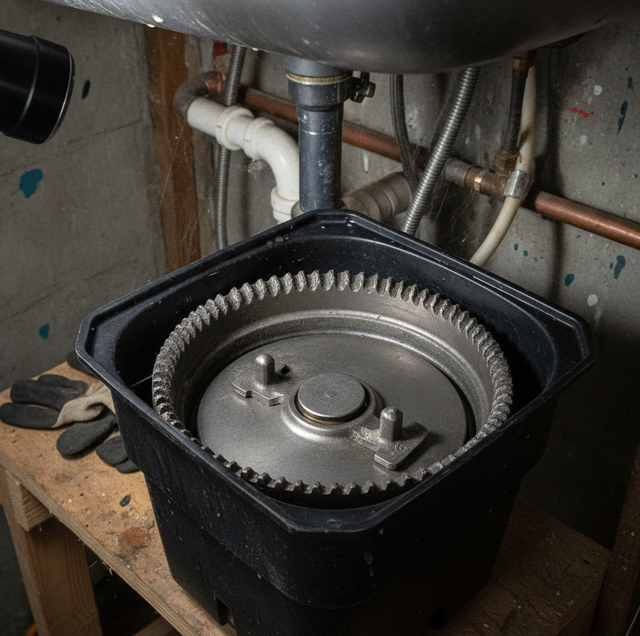
Quick Answer: A disposal that hums but will not turn on is jammed, not dead. The motor is getting power, but something wedged against the grinding plate is holding it still, so it buzzes in place. Shut the power off, use the hex wrench in the bottom socket to rock the plate free, fish out the object with tongs, then press the red reset button and test. If it still only hums after the jam is clear, the motor itself has usually given up.
A garbage disposal that buzzes but refuses to grind is telling you something very specific, and once you can read the sound, you are most of the way to fixing it. The hum is not random. It is the signature of one particular failure, and it points you straight at the cause instead of leaving you guessing among a dozen possibilities.
Here is what the noise means. The motor is receiving power, spinning up, and trying to turn the grinding plate. But something is holding that plate still, so the motor strains against a load it cannot move and sits there vibrating in place. That vibration is the hum. It is the sound of a motor pushing against a wall that it cannot break through.
What The Hum Actually Tells You
Inside the disposal, a flat metal disc called the flywheel spins at the bottom of the grinding chamber. Two blunt metal lugs, the impellers, ride on top of it and fling waste outward against a fixed ring of teeth, the grind ring, which shreds it. Nothing is razor-sharp in there. The whole system works by throwing food against the ring at speed, not by slicing it.
When something hard gets pinned between an impeller and the grind ring, the flywheel cannot rotate. The motor still tries. Power flows, the windings energize, and the rotor wants to turn, but the jammed plate holds everything locked. So instead of spinning, the motor buzzes against the obstruction. That buzz is your diagnosis: power is fine, the jam is the problem.
This is why the sound matters so much for figuring out what is wrong. Three different disposal failures each make a different noise, and telling them apart saves you from chasing the wrong repair.
A disposal that hums and does not spin is jammed. Power is reaching the motor; something is physically blocking the plate.
A disposal that is completely silent when you flip the switch is not jammed; it is dead to power. The internal overload has tripped and stayed open, the unit is unplugged, the outlet is off, or a wall breaker or the switch has failed. A jam does not make silence; silence is an electrical story.
A disposal that spins freely and grinds normally but leaves water under the cabinet is neither jammed nor dead. That is a seal or connection leaking, a separate problem with its own path, and it has nothing to do with the hum you are chasing here.
Getting this first read right keeps you from pressing reset over and over on a unit that is actually jammed or prying at a flywheel on a unit that simply lost power.
Why The Hum Leads To A Trip
There is a clock running while a disposal hums, and it is worth understanding before you do anything else. Built into the motor is a thermal overload protector, a small heat-sensitive switch that guards the windings. When the motor stalls against a jam, all the electrical energy that would normally become motion turns into heat instead, and the windings warm up fast.
The overload protector watches that temperature. Once the motor crosses its heat limit, the protector snaps open and cuts power to save the windings from cooking. That is the moment the hum stops on its own, and the unit goes dead. It is also the moment a small red button on the underside of the disposal pops out, the reset button, which stays out until you push it back in.
So the sequence runs like this: something jams the plate, the motor hums as it strains, heat builds, and the overload trips to protect itself. This is a safety feature doing its job, and it is the reason you should never sit there holding the switch on while a disposal buzzes. Every extra second of humming is heat you are pumping into windings that are not moving.
Turn The Power Off First, Every Time
Before your hand or any tool goes near the disposal, the power has to be off. This is not a soft suggestion; it is the rule that the whole repair is built on.
Flip the wall switch that runs the disposal to off. Then go further: if the unit plugs into an outlet under the sink, unplug it, or switch off the breaker that feeds it. The goal is a disposal that physically cannot start while your fingers are near the grinding chamber. A disposal that lurches to life unexpectedly is one of the more dangerous things under a kitchen sink, and cutting power at two points removes any chance of it.
Never put a hand down into the disposal, even with the power off. The grind ring and impeller lugs are blunt but still hard metal, and a jammed object can have a sharp edge, like a chip of bone or the tine of a fork. Everything you do inside the chamber is done with a tool, not fingers. That single habit prevents the injuries these repairs are known for.
The Homeowner-Safe Fix, Step By Step
With power confirmed off, the repair itself is short and mechanical. Most jams free in a few minutes.
Start underneath the unit. Center on the bottom of nearly every disposal is a six-sided socket sized for a hex, or Allen, wrench. Many disposals ship with the correct wrench clipped to the side of the unit or taped near the plumbing; a quarter-inch hex from any set fits most. Seat the wrench in the socket and work it firmly back and forth. You are turning the flywheel by hand, rocking it in both directions to break the wedged object loose from where it is pinned between the impeller and the grind ring. You will often feel the exact moment it frees, when the plate suddenly swings past the point it was stuck on.
With the plate loosened, move to the top and clear the object out. Shine a flashlight down the throat of the disposal and look for what caused the jam. Reach in with kitchen tongs or a pair of needle-nose pliers, grip the offender, and lift it out. Do not use your fingers for this even now. Turn the flywheel with the wrench a few more times to confirm it spins full circle with no catch.
Now deal with the reset. If the motor tripped its overload while it was humming, the red button on the bottom will be popped out. Give the unit several minutes to cool, then press that button firmly back in until it clicks and stays seated. Pressing it before the motor has cooled often will not hold, and pressing it while the jam is still in place just sets you up to trip it again.
Finally, restore power and test. Run cold water into the disposal, switch it on, and listen. A clear jam and a seated reset button usually give you a clean, steady grind on the first try. Let it run a few seconds to be sure it is turning freely, then shut it down.
When The Fix Does Not Take
Sometimes you clear the jam, seat the reset, restore power, and the disposal still only hums. When the plate spins freely by hand, but the motor cannot turn it under power, the problem has moved from the chamber to the motor itself.
Inside every motor is a start winding that gives the initial push to get the rotor spinning, and a set of bearings that the shaft rides on. Both wear out. A start winding can fail, so the motor can energize but never break into rotation, and bearings can seize, so the shaft binds even with nothing jamming the plate. In either case, the motor hums because it is powered but cannot move, the same sound as a jam but with an empty, clear chamber behind it.
A hum with a free-spinning flywheel and a reset button that will not hold its charge is a worn-out motor, not a jam, and no amount of resetting brings a seized motor back. At that point, the unit has reached the end of its life, and the repair becomes a replacement. Swapping a disposal means disconnecting it from power and from the drain plumbing and wiring in the new one, which is work for a licensed plumber rather than a wrench-and-tongs job at the sink.
The same line applies to anything electrical. Freeing a jam and pressing reset are homeowner territory. Opening the wiring, replacing the unit, or diagnosing why a disposal keeps tripping with no jam in sight is a pro's call, both for safety and to get it done once.
Frequently Asked Questions
The socket in the underside takes a quarter-inch hex, also called an Allen wrench. If you have lost the one that shipped clipped to the unit, a standard quarter-inch Allen key from any set slides right in and does the same job. Seat it, then rock the shaft in both directions to break the jam loose from below without reaching into the chamber. If the socket is stripped or the wrench will not grip, a wooden broom handle can be pushed down against the blades from inside the drain, power off, and then rock the flywheel instead.
It is a small red button on the bottom of the unit, and it pops out on its own when the motor overheats and trips its overload. Press it back in only after the jam is cleared, and the motor has cooled for a few minutes, until it clicks and holds. If that red button will not stay pressed in after the motor has fully cooled and the jam is gone, that usually means the motor itself has failed rather than just tripping an overload. A reset that keeps popping back out is a sign the unit is done.
Hard items are the usual culprits: bones, fruit pits, and popcorn kernels are small and dense enough to wedge between the impeller and the grind ring and lock the plate. Fibrous and starchy waste causes the other kind of jam. Celery strings, potato peels, and pasta swell and bind around the plate instead of clearing, so they choke the mechanism rather than getting flung against the teeth. Keeping those two categories out of the disposal prevents most jams before they start.
Keep the power off, then use a flashlight to light the chamber and kitchen tongs or needle-nose pliers to reach in, never your fingers. If the object is buried where you cannot get a grip from the top, the hex wrench in the bottom socket usually breaks it loose from below, after which it either drops clear or shifts into reach so you can lift it out with the tongs.
Usually, yes. Most disposals last about 8 to 12 years, so an older unit that only hums with a clear chamber and a freely spinning flywheel is generally past saving. A faint burning electrical smell coming off it confirms the motor winding has failed, rather than a mechanical jam holding the plate. At that age and with that smell, another reset will not bring it back, and replacement is the sensible call.
Yes, and quickly. Holding the switch on while the disposal only hums dumps electrical energy into windings that are not turning, and it all becomes heat. That heat trips the overload protector, and repeated attempts to force it can bake the windings until the motor burns out for good. Stop after one short try, cut the power, and clear the jam before switching it on again; that discipline is often the difference between a five-minute fix and a dead unit.
Book a plumber to free a stubborn jam or swap a worn-out disposal — get your kitchen sink draining and grinding again. Solace Plumbing serves Gilbert and the East Valley. ROC #334000. Call (480) 630-0224.
