Toilet Weak or Slow to Flush? 7 Real Causes
Quick Answer: A weak or slow flush is usually caused by clogged rim and siphon-jet holes, a low tank water level, a partial clog in the trap or drain, a flapper that closes too early, or mineral scale narrowing the internal passages. Most of these are checkable in a few minutes; a recurring clog or slow flow across multiple fixtures points to a drain or vent problem for a plumber.
A toilet that swirls lazily, leaves paper behind, or needs two pulls of the handle almost always comes down to one thing: not enough water moving fast enough to start a strong siphon. The parts may be old, partly clogged, or set wrong, but the shortfall is the same. Once you know how the flush is supposed to work, the weak-flush causes line up in a short, checkable list.
How A Toilet Flush Actually Works
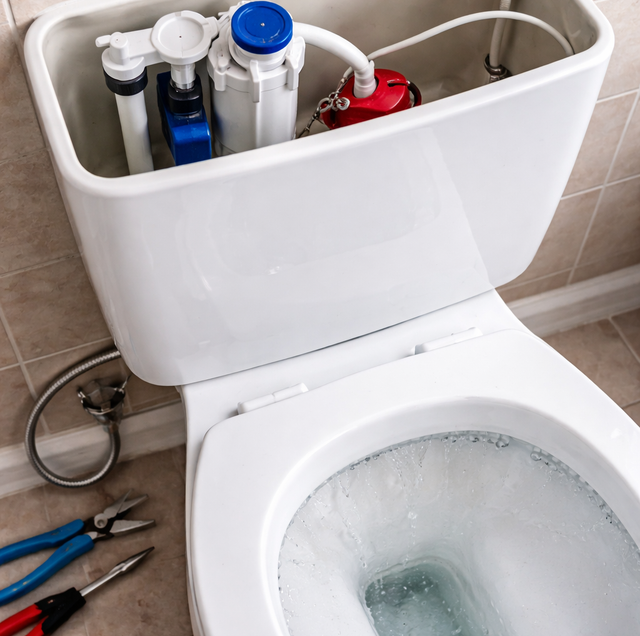
Understanding the mechanism makes every cause below obvious. When you push the handle, a chain lifts the flapper at the bottom of the tank, and roughly a gallon or more of stored water drops fast into the bowl. Most of that water rushes out through small holes under the bowl rim (the rim jets), and one larger opening near the front or bottom of the bowl called the siphon jet.
That sudden rush does the real work. It fills the curved trap at the back of the bowl until water spills over the trap's weir, and a siphon forms, the same pull that empties a straw when you cover one end. The siphon yanks the bowl contents down the drain in a few seconds, then breaks with a gurgle once the bowl empties. A gravity toilet has no pump. The whole flush depends on volume (how much water the tank releases) and speed (how fast it gets into the bowl). Anything that reduces either one produces a weak, slow, or incomplete flush.
Clogged Rim Jets And Siphon Jet
This is the most common and most overlooked cause. The rim holes and the siphon jet are narrow, and they sit in constantly wet porcelain, so mineral scale and a slimy bacterial buildup slowly collect inside them. As the openings shrink, less water reaches the bowl, and it arrives with less force, so the siphon starts weakly or not at all. A telltale sign is water that trickles down the sides instead of blasting around the rim, or a flush that swirls only on one side.
Hold a small mirror under the bowl rim to spot the row of flush holes, and gently ream any crusted ones with a short length of stiff wire or an unfolded paperclip without scratching the glaze. For scale, pour a cup of warm white vinegar into the overflow tube in the tank and let it sit for an hour or two before flushing and scrubbing.
Low Tank Water Level
If the tank does not fill to its normal line, it cannot release enough water to drive a full siphon. The water line should sit about an inch below the top of the overflow tube. Lift the lid and look. If the level is low, the fill valve or float needs adjusting.
Adjusting the float and fill: On a modern column-style fill valve, turn the adjustment screw or slide the clip to raise the float so the valve shuts off at a higher level. On an older ball-float valve, gently bend the float arm upward or turn the float. Raise the level in small steps and test, stopping short of the overflow tube so water does not run continuously.
A Flapper That Closes Too Early
Even with a full tank and clean jets, a flapper that drops shut before the tank empties cuts the flush short. You get a quick, weak swirl because only part of the stored water made it into the bowl. Watch the tank during a flush: if the flapper falls closed while water is still draining, that is the fault.
Chain and flapper checks: A chain with too much slack can kink or get pinched and pull the flapper down early; a chain that is too tight holds it open and wastes water. Set the chain with just a little slack. If the flapper itself is warped, waterlogged, or stiff with age, it will not stay up through the full flush and should be replaced with one matched to the toilet. Mismatched or worn flappers are a frequent cause of both weak flushes and phantom running.
A Partial Clog In The Trap Or Drain
A blockage does not have to stop the toilet completely to weaken it. A wad of paper, a flushed wipe, or a buildup in the trap or the line just past it can throttle the flow so the bowl drains slowly and often refills high before creeping down. So-called flushable wipes are a common culprit because they do not break apart the way toilet paper does.
Plunger and auger: Start with a good flange plunger, the kind with an extended rubber lip that seats into the bowl outlet, and work it with firm straight pushes to move the clog. If plunging does not clear it, a toilet (closet) auger can reach into the trap without scratching the porcelain and either break up or retrieve the obstruction. Avoid harsh chemical drain cleaners in a toilet: they can crack the bowl, damage seals, and sit in standing water without reaching the blockage.
A Clogged Vent Slowing The Flow
Every drain system has a vent, usually a pipe running up through the roof, that lets air in behind the draining water. Without that air, a vacuum forms and holds the water back, the same way a soda bottle glugs and empties slowly when you tip it fast. A partly blocked vent (leaves, a nest, or debris) can make a toilet flush sluggishly and gurgle even when the bowl and drain are clear. A classic clue is a bubbling toilet or a nearby drain that gurgles when the toilet flushes. Vent work happens on the roof and is usually best left to a plumber rather than tackled with a ladder and guesswork.
Hard-Water Scale In The Internal Passages
In areas with hard water, dissolved minerals leave scale not just on the visible rim holes but inside the trapway and the passages molded into the porcelain. Over years, this narrows the channels the flush water travels through, so even a clean-looking bowl flushes weakly. Regular vinegar treatments through the rim and the siphon jet slow the buildup, but a bowl with heavily scaled internal passages sometimes cannot be fully restored and is one reason an old toilet may never flush strongly again.
Older Low-Efficiency Designs Versus A Modern 1.28-GPF Toilet
Not every weak flush is a defect. Some first-generation low-flow toilets from the 1990s were simply engineered poorly: they cut the water without redesigning the bowl and trap, so they clogged and flushed weakly from day one. A well-designed modern 1.28-gallon-per-flush toilet uses a larger, glazed trapway and a carefully shaped siphon jet to flush cleanly on less water. If a toilet has been sluggish since it was installed and cleaning the jets and setting the tank correctly changes nothing, the design itself may be the limit, and a modern replacement can outperform it on less water.
DIY Checks Versus When To Call A Plumber
Most weak-flush causes are homeowner-friendly. In order, check that the tank fills to the line, that the flapper stays open through the flush, that the rim and siphon jets are clear, and that a plunger or auger clears any partial clog. Wear gloves for anything inside the bowl or trap. If the toilet keeps running or threatens to overflow, shut the supply at the valve behind the toilet, or lift the float in the tank to stop the fill until you can work on it.
Call a plumber when the problem is bigger than one fixture or keeps coming back: clogs that return within days, several drains that gurgle or run slow together, water backing up when other fixtures drain, any sign of sewage backup, or a visible crack in the porcelain. Those point to a main-line or vent problem, or a toilet that needs replacing, rather than a quick tank adjustment.
Frequently Asked Questions
The bowl holds only a small standing pool at the trap, but the tank stores the working charge, typically about 1.28 gallons on a modern toilet and up to 3.5 or more on older models. That stored tank water, not the bowl water, is what drives the siphon, which is why a tank filling even an inch low noticeably weakens the flush.
Yes. Beyond scaling the flush passages, minerals and grit settle on the flapper's sealing edge and on the flush-valve seat it presses against. A gritty or scaled seat lets the flapper leak or seat unevenly, which can drop it early or cause slow running between flushes. Wiping the seat clean when you replace a flapper is a step many people skip.
Only the level matters for flush strength. The fill valve refills the tank after the flush and has no role in the flush itself, so a slow-filling valve makes you wait between flushes but does not weaken the flush once the tank is full. Diagnose flush power from the tank level and the flapper, and diagnose slow refilling separately at the fill valve.
Pouring roughly a gallon and a half of water straight into the bowl fast can force a siphon and flush a clog when the tank mechanism is failing, because you are supplying the volume and speed by hand. It is a useful test and a stopgap during a tank repair, but if a hand-poured flush works while the normal flush does not, the fault is in the tank or the jets, not the drain.
Uneven swirl usually means the rim jets on the weak side are partly clogged with scale, so water is not being distributed evenly around the rim. Reaming those specific holes with wire and running a vinegar treatment through the rim often restores an even, full-bowl swirl. Persistent one-sided flow with clear holes can indicate a casting or scale problem inside the rim channel itself.
Not necessarily; some early low-flow models were designed with so little water that a second flush was practically expected for solids. On a properly working modern toilet, though, a new need for two flushes signals a real change, usually clogged jets, a low tank, or an early-closing flapper, and is worth checking rather than accepting as normal.
Get a stubborn slow flusher diagnosed and cleared for good — a quick fix now beats a backed-up bathroom later. Solace Plumbing serves Gilbert and the East Valley. ROC #334000. Call (480) 630-0224.
